SeaWorld: Orcas wish they weren't there!
Although some children dream of running away to join the circus, it’s a safe bet that most animals forced to perform in circuses dream of running away from the circus. Flashy costumes and bright lights do nothing but hide the fact that animals used in circuses are forced—under threat of punishment—to perform confusing, uncomfortable, repetitious, and often painful acts.
A Life Far Removed From Home
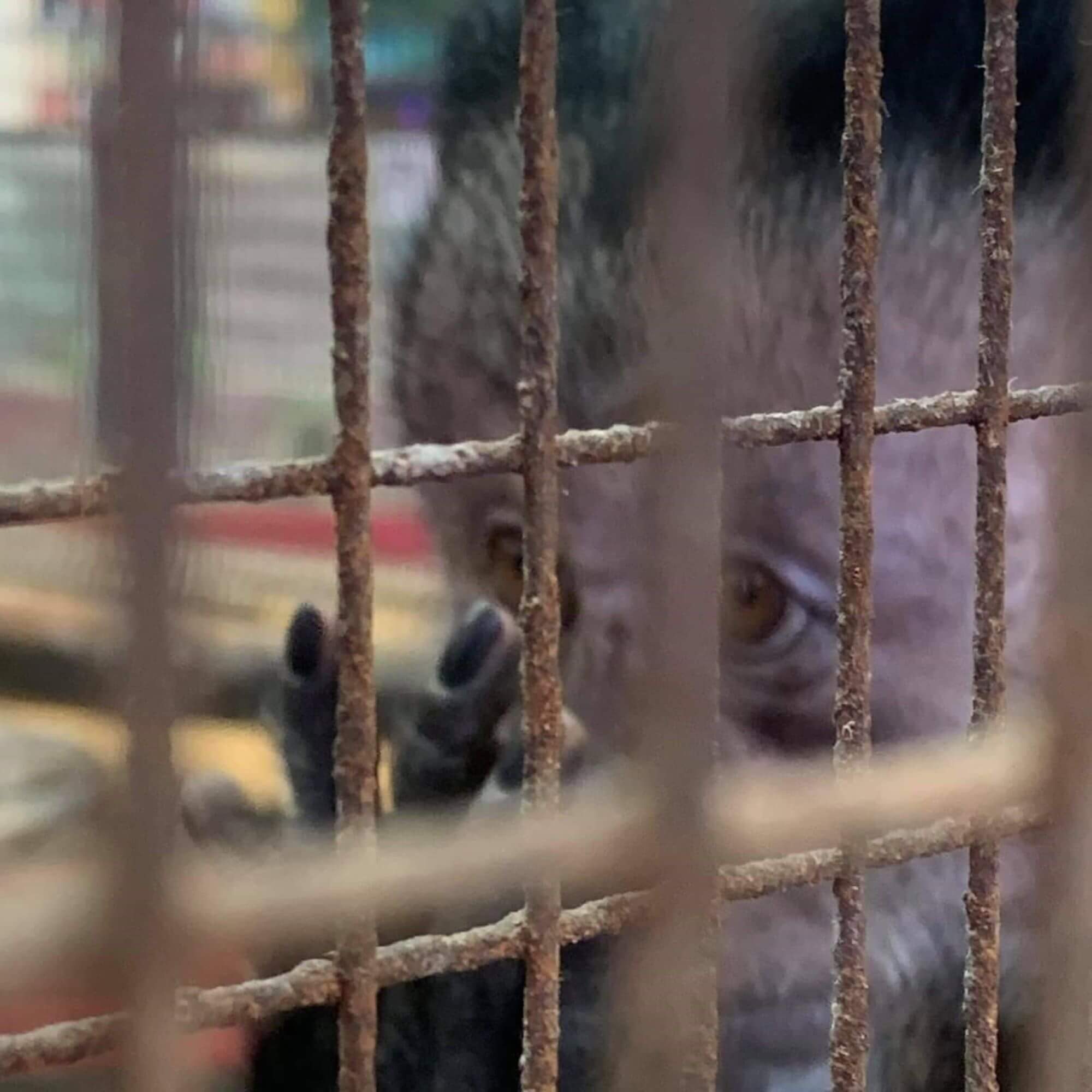
Because circuses are constantly traveling from city to city, animals’ access to basic necessities such as food, water, and veterinary care is often inadequate. The animals, most of whom are quite large and naturally active, are forced to spend most of their lives in the cramped barren cages and trailers used to transport them, where they have only enough room to stand and turn around. Most animals are allowed out of their cages only when they must perform. Elephants are kept in leg shackles that prevent them from taking more than one step in any direction, and the minimum requirements of the federal Animal Welfare Act (AWA) are routinely ignored.
During the off-season, animals used in circuses may be housed in traveling crates or barn stalls— some are even kept in trucks. This continuous confinement has harmful physical and psychological effects on animals, which are often indicated by unnatural forms of behavior such as repeated head-bobbing, swaying, and pacing.(1)
The tricks that animals are forced to perform—such as when bears balance on balls, apes ride motorcycles, and elephants stand on two legs—are physically uncomfortable and behaviorally unnatural and teach audiences nothing about how animals behave under normal circumstances.
Beaten Into Submission
Physical punishment has always been the standard training method for animals in circuses. Animals are beaten, shocked, and whipped to make them perform—over and over again—tricks that make no sense to them. The AWA allows the use of bullhooks, whips, electrical shock prods, and other devices by circus trainers. Trainers drug some animals to make them “manageable” and surgically remove the teeth and claws of others.
Video footage shot during a PETA undercover investigation of Carson & Barnes Circus showed Carson & Barnes’ animal-care director, Tim Frisco, as he viciously attacked, yelled and cursed at, and shocked endangered Asian elephants. Frisco instructed other elephant trainers to beat the elephants with a bullhook as hard as they could and to sink the sharp metal bullhook into the animals’ flesh and twist it until they screamed in pain. The videotape also showed a handler who used a blowtorch to remove elephants’ hair as well as chained elephants and caged bears who exhibited stereotypic behavior caused by mental distress.
Cole Bros. Circus has been cited repeatedly by the U.S. Department of Agriculture (USDA) for animal welfare violations. According to congressional testimony given by former Cole Bros. elephant keeper Tom Rider, “[I]n White Plains, N.Y., when Pete did not perform her act properly, she was taken to the tent and laid down, and five trainers beat her with bullhooks.” Rider also told officials that “[a]fter my three years working with elephants in the circus, I can tell you that they live in confinement and they are beaten all the time when they don’t perform properly.”(2)
Former Ringling Bros. and Barnum & Bailey Circus employees have reported that elephants are routinely abused and violently beaten with bullhooks. In 2009, PETA recorded Ringling Bros. employees for many months and in numerous U.S. states. Eight employees, including the head elephant trainer and the animal superintendent, were videotaped backstage repeatedly hitting elephants in the head, trunk, ears, and other sensitive body parts with bullhooks and other cruel training devices just before the animals would enter the arena for performances. A tiger trainer was videotaped beating tigers during dress rehearsals. Video footage from the investigation can be viewed at RinglingBeatsAnimals.com.
In lieu of a USDA hearing, Feld Entertainment, Inc. (the parent company of Ringling Bros.), agreed to pay an unprecedented $270,000 fine for violations of the AWA that occurred between June 2007 and August 2011.(3)
Animals Rebel
These intelligent captive animals sometimes snap under the pressure of constant abuse. Others make their feelings abundantly clear when they get a chance. Flora, an elephant who had been forced to perform in a circus and was later moved to the Miami Zoo, attacked and severely injured a zookeeper in front of visitors.(4) As Florida police officer Blaine Doyle—who shot 47 rounds into Janet, an elephant who ran amok with three children on her back at the Great American Circus in Palm Bay—noted, “I think these elephants are trying to tell us that zoos and circuses are not what God created them for … but we have not been listening.”(5)
What You Can Do
As more people become aware of the cruelty involved in forcing animals to perform, circuses that use animals are finding fewer places to set up their big tops. The use of animals in entertainment has already been restricted or banned in cities across the U.S. and in countries worldwide. Bolivia, Greece, Israel, Peru, and Sweden have banned the use of all animals in circuses, and Britain has prohibited the use of wild animals in traveling circuses.(6,7)
Don’t patronize circuses that use animals. PETA can provide literature to pass out to patrons if the circus comes to your town. Find out about state and local animal protection laws, and report any suspected violations to authorities. Contact PETA for information on ways to get an animal-display ban passed in your area.
Take your family to see only animal-free circuses, such as Cirque du Soleil or the New Pickle Family Circus.
References
1) Randi Hutter Epstein, “Circus Life Drives Animals Insane, Two British Rights Groups Contend,” The Associated Press, 24 Aug. 1993.
2) Tom Rider, testimony, legislative hearing on H.R. 2929, 13 June 2000.
3) Leigh Remizowski, “USDA Fines Ringling Bros. Circus Over Treatment of Animals,” CNN.com, 29 Nov. 2011.
4) NBC 6 News Team, “Elephant Who Attacked Handler Was Circus Star,” NBC6.net, 17 Dec. 2002.
5) Louis Sahagun, “Elephants Pose Giant Dangers,” Los Angeles Times 11 Oct. 1994.
6) Sydney Azari, “Greece Bans Animal Circuses,” Bikya Masr 10 Feb. 2012.
7) Fred Attewill, “Travelling Circuses Banned From Using Wild Animals in Shows,” Metro 1 Mar. 2012.