
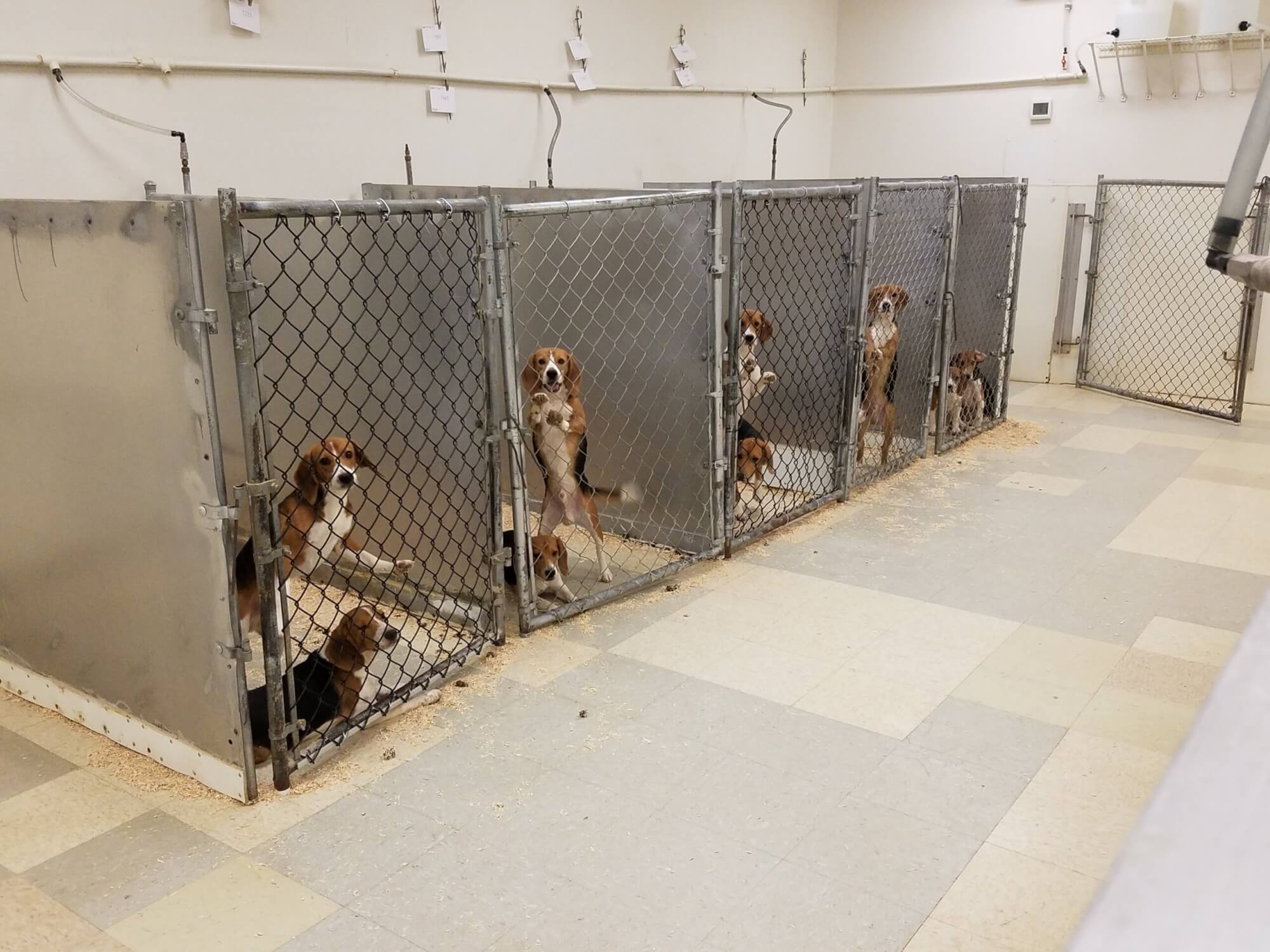
PETA Exposed the Misery at Red Beast Enterprises, Now It’s Closed!
Update (May 15, 2026): Victory! Red Beast Enterprises, also known as “High Quality Research,” has shut down, and nearly 70 animals it forced to endure years of painful experiments are finally free.
The surviving cats and dogs are now at Kindness Ranch, a Wyoming organization that rehabilitates animals used in experiments. PETA’s findings sparked federal regulatory action and widespread protests, which helped pave the way for this animal prison’s long-overdue closure and the liberation of these cats and dogs.
After PETA submitted a complaint and evidence, federal veterinarians inspected the facility and cited it for more than 200 examples of alleged violations of 11 federal Animal Welfare Act regulations, reporting that the laboratory:
– failed to provide adequate veterinary care to cats with chronic eye discharge and dogs with hair loss, skin issues, apparent thyroid disease, and other ailments.
– denied a dog medical treatment for an ear infection for four days after the condition was diagnosed. The feds noted this could be “painful and distressing” and lead to permanent ear damage.
– did not examine a dog with hair loss and red skin on his face—apparently the result of mange—until nine days after his condition was reported and did not treat him for another 10 days.
Finally out of cages, Red Beast’s former victims will now experience what every cat and dog deserves—the opportunity to experience joy, love, and respect as members of a family.
Thanks so much for speaking up—now, please use your voice to help save dogs from deadly experiments at the University of Massachusetts Chan Medical School!
Original post:
This is Bug:
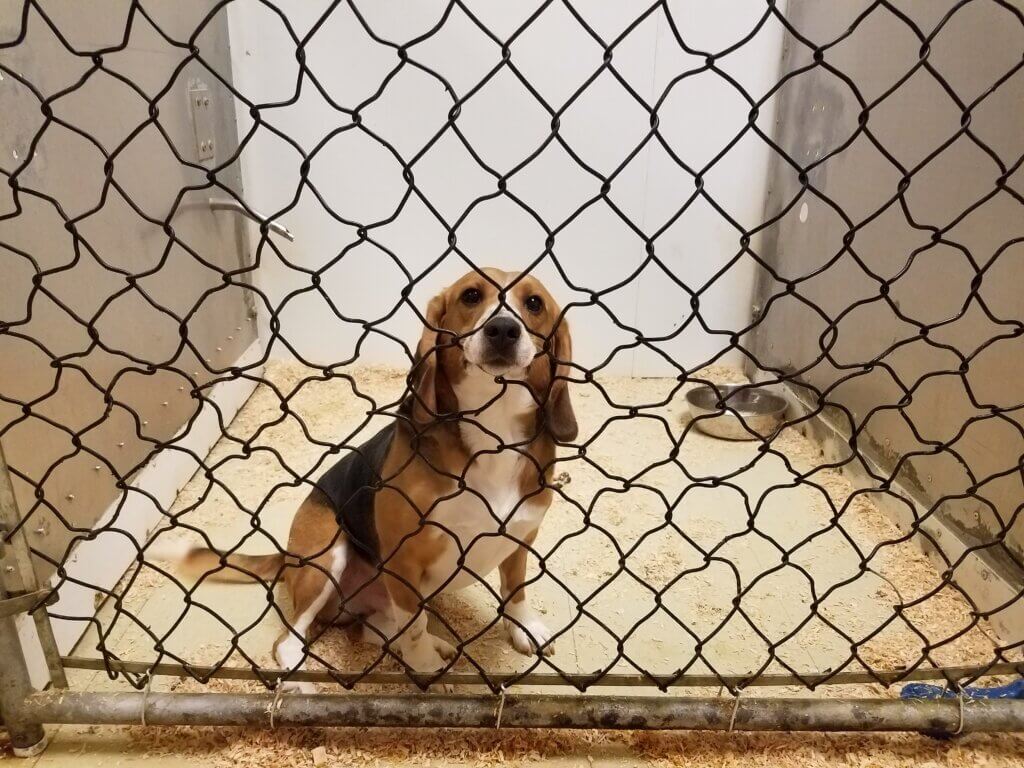
Bug is one of 100+ dogs imprisoned at High Quality Research (HQR) in Fort Collins, Colorado, where every one of his days is filled with deprivation and suffering. To keep Bug from crying out in misery, the facility’s veterinarian “debarked” him—-restricting his only ability to try to communicate by cutting into his vocal cords and muffling his voice.
This is Docker:
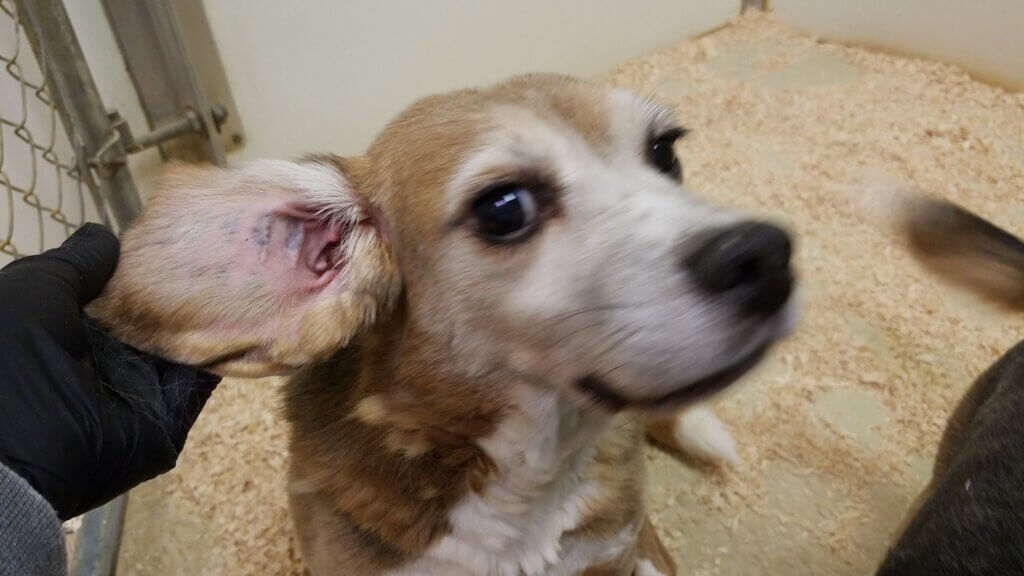
Nearly 24/7, the laboratory keeps Docker trapped in a chain-link kennel in a cinder block room. When PETA’s investigator looked into the laboratory, Docker had a golf ball-sized mass on his neck and had so many of his teeth pulled that his tongue flopped out of his mouth.
The investigator repeatedly asked to adopt Docker, but both HQR’s president and veterinarian said no because house-training him would be too hard. Workers also said that Docker could never leave because he was “assigned” to a client that “tend[s] to hang on to…animals forever.” 🤬 Imagine someone talking about your companion animal this way. Docker is no different than our dogs—hell, he could be related—so why tf is he being treated like backroom inventory?
[There’s] really not a lot we can do about it.
— HQR's president when asked about dogs who paced or circled out of stress.
Bug and Docker aren’t the only dogs suffering at this laboratory—PETA’s investigator saw that none of the dogs had a bed or anything else to make them comfy, and they were never allowed outside. Think about how restless your dog gets just a few hours after their last walk—the dogs at HQR never get a chance to go on a walk or even experience fresh air.
With nothing meaningful to do, the dogs barked constantly. The kennels were deafening—we’re talking nearly 115 dB (like a fire engine siren).
HQR could have done something positive to reduce the noise—you know, like not imprisoning 100+ dogs in concrete rooms. Instead, the facility’s veterinarian put forceps down dogs’ throats and used the tool’s “teeth” to cut the dogs’ vocal cords.
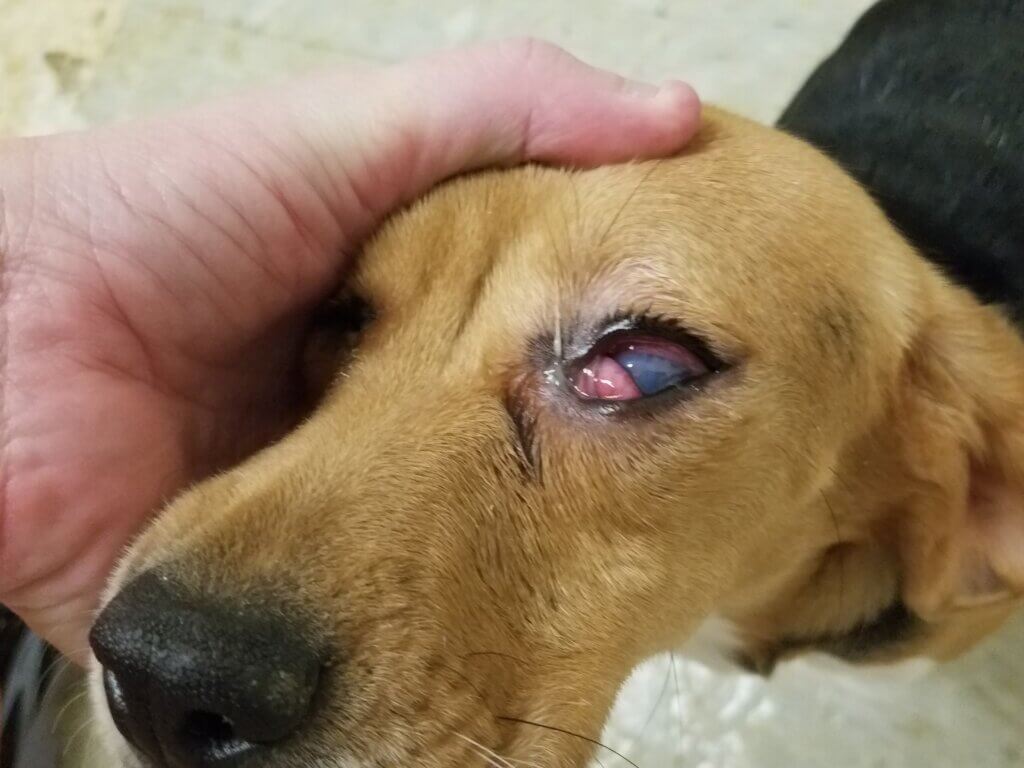
“[I want to] get a fair amount of use out of [her]”
— HQR's president explaining why he denied the investigator’s request to adopt Kegan.
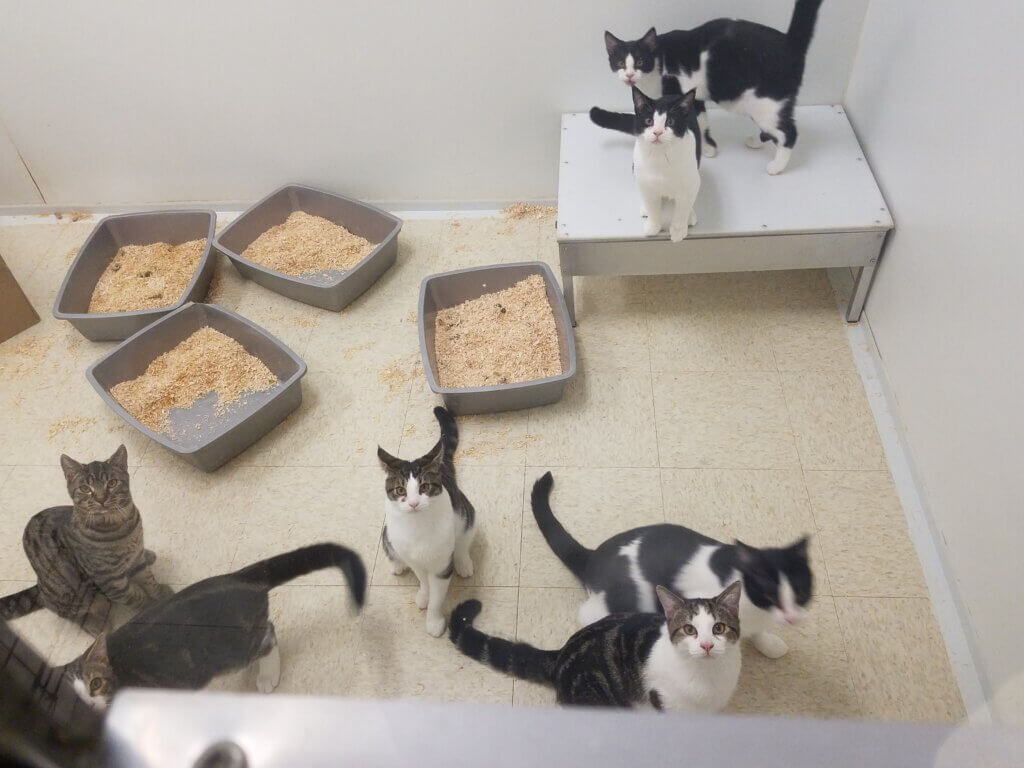
The facility also kept nearly 30 cats—some apparently for over a decade—in hard tile-floored rooms without beds or blankets.
They climbed all over PETA’s investigator, desperate for interaction and love. The investigator asked to adopt one of the cats, but the laboratory’s president said this couldn’t happen until Dr. Michael Lappin, an experimenter from Colorado State University was “done with them.” 😰
After hearing about all this misery, the quality of the laboratory’s studies might not be your #1 concern (valid). But for the record, its studies are crap.
Oh, f*ck.
— HQR's president when he learned that yet another dog in a study wasn’t eating and had diarrhea.
A supervisor said that cats had herpesvirus but were still used for experiments, possibly making any results worthless. HQR also confined at least 70 rats alone in plastic shoebox-style cages to be used in a prostate cancer experiment, but almost 97% of cancer drugs tested on animals fail to get approval when tested on humans.